

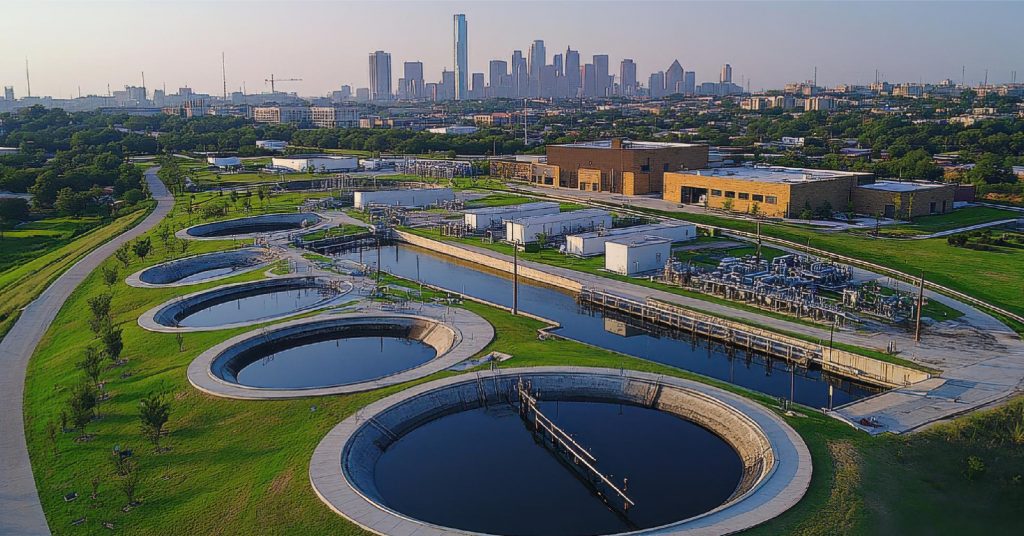
Kenya’s cities are expanding rapidly. Urbanization, industrial growth, and rising population density are placing immense pressure on existing water systems. Nairobi, Mombasa, Kisumu, and emerging urban hubs are all facing the same challenge: how to deliver safe, reliable water while infrastructure struggles to keep pace with demand.
In this context, investing in a modern water treatment plant is not just about supply—it is about strengthening city water infrastructure, ensuring sustainability, and supporting long-term economic development.
The Urban Water Challenge in Kenya
Growing cities demand more water for households, commercial establishments, healthcare, industry, and public services. However, many urban areas face:
- Aging pipelines and treatment facilities
- Intermittent supply and water losses
- Variable raw water quality due to pollution
- Climate-related stress, such as droughts and seasonal variability
Traditional treatment systems designed decades ago are often insufficient for today’s urban demands. To support water treatment for growing cities, modern, scalable, and efficient solutions are essential.
Role of a Modern Water Treatment Plant
A modern water treatment plant does more than remove impurities. It is designed to handle fluctuating loads, diverse contaminants, and stricter quality standards while operating efficiently.
Key functions include:
- Removal of suspended solids and turbidity
- Disinfection to eliminate pathogens
- Reduction of dissolved contaminants
- Stabilization for safe distribution
For Kenya’s expanding urban centers, treatment plants must also be flexible enough to scale with population growth.
Upgrading City Water Infrastructure
Improving city water infrastructure goes beyond building new facilities. It requires an integrated approach that connects treatment, storage, distribution, and monitoring systems.
Modern infrastructure focuses on:
- Reducing non-revenue water through leak detection
- Real-time monitoring of quality and flow
- Energy-efficient pumping and treatment processes
- Smart automation and control systems
This integrated model ensures that treated water not only meets quality standards but also reaches consumers reliably and efficiently.
Advanced Water Treatment Technologies
Today’s water treatment technologies offer higher efficiency, better contaminant removal, and improved operational control compared to conventional systems.
Some key advancements include:
1. Membrane Filtration Systems
Membranes provide superior removal of suspended particles, microorganisms, and dissolved impurities. They are especially valuable where raw water quality varies significantly.
2. Advanced Disinfection Technologies
Modern UV and ozone systems enhance pathogen removal without excessive chemical usage.
3. Automation and Smart Monitoring
Digital systems allow operators to monitor plant performance in real time, optimizing chemical dosing, energy consumption, and water quality.
4. Modular and Scalable Designs
Modular treatment systems enable phased capacity expansion—ideal for water treatment for growing cities where demand increases steadily.
These technologies make modern water treatment plants more resilient, efficient, and future-ready.
Supporting Sustainable Urban Growth
For Kenya, sustainable water management is directly linked to economic development. Reliable access to treated water supports:
- Public health and reduced disease burden
- Industrial productivity
- Tourism and commercial growth
- Agricultural and peri-urban development
Modern water treatment plant solutions reduce operational costs, minimize environmental impact, and enhance service reliability—critical factors for growing cities.
Ion Exchange’s Contribution to Modern Water Solutions
Ion Exchange brings decades of experience in delivering comprehensive water solutions tailored to diverse geographies. Our approach integrates advanced water treatment technologies with strong engineering and lifecycle support.
Capacity Enhancement of Delhi Jal Board’s Haiderpur Water Treatment Plant with Ion Exchange’s UHRC Technology
With rapid urbanization and a growing population, the demand for safe drinking water continues to rise, placing immense pressure on Public Health Engineering Departments to meet supply needs. Expanding urban water infrastructure in densely populated Metro cities like Delhi is a challenge due to land scarcity, high costs, and complex transmission and distribution networks. Given these constraints, enhancing the capacity of existing Water Treatment Plants (WTPs) presents a viable and cost-effective solution.
The Role of Ion Exchange in Haiderpur WTP Capacity Enhancement
The Haiderpur Water Treatment Plant, which sources raw water from the Bhakra Nangal Canal, currently operates in two phases, with a combined capacity of 200 MGD (900 MLD). Ion Exchange played a pivotal role in increasing this capacity by introducing its advanced Ultra High Rate Clarifier (UHRC) technology—a compact, efficient, and cost-effective solution for water clarification.
The INDION UHRC unit integrates mixing, flocculation, and sedimentation within a single treatment basin, ensuring high-rate clarification and maximum treated water production without requiring additional land. This technology leverages solids contact clarification, where previously formed precipitates accelerate chemical reactions, forming dense sludge particles that settle rapidly.
By implementing UHRC technology, Ion Exchange has successfully demonstrated its technical competence and enhanced the capacity of the Clari-floculator by more than 75%. The Haiderpur Water Treatment Plant (WTP) comprises 16 Clari-flocculators, each with a diameter of 52 meters and an existing capacity of 12.5 MGD. The capacity enhancement was achieved solely through electro-mechanical modifications within the existing site, eliminating the need for land expansion. Following these modifications, the capacity of each Clari-flocculator has increased to over 22 MGD, representing a significant 75%–80% boost in the overall capacity of the WTP.
Additionally, after the upgrade, the plant can now handle:
- Inlet raw water turbidity up to 4000 ppm
- Treated water turbidity of less than 30 ppm
Ion Exchange’s UHRC technology can enable Haiderpur WTP to significantly expand its capacity (more than 80%) while maintaining high treatment efficiency and water quality. This innovative approach demonstrates the potential of modern water treatment solutions to address urban water challenges sustainably, ensuring a reliable supply of safe drinking water for Delhi’s growing population.
Optimizing Municipal Water Treatment with Advanced INDFLOC Polymer Dosing Systems: Uttar Pradesh & Chhattisgarh
Municipal water treatment plants often struggle with high turbidity, sludge generation, and poor colour removal due to outdated infrastructure and inefficient chemical dosing. Traditional methods like alum and chlorination fail to meet modern water quality standards, especially during seasonal variations and high organic loads.
Ion Exchange India Limited (IEIL) has transformed water treatment through polymer dosing systems, optimizing coagulation and flocculation while reducing chemical consumption and sludge production in Lucknow, Varanasi, and Bhilai, showcasing how IEIL’s polymer dosing solutions have improved water clarity, ensured compliance, and modernized municipal water treatment.
The Way Forward for Kenya’s Urban Water Systems
As urban populations continue to rise, Kenya must prioritize the modernization of treatment plants and infrastructure. Future-ready systems that incorporate advanced water treatment technologies and integrated city water infrastructure will determine how effectively cities meet rising demand.
Investing in modern water treatment is not simply a response to growth—it is a proactive strategy to ensure resilience, health, and economic stability.
Conclusion
Growing cities in Kenya require modern, scalable, and efficient water solutions. A well-designed water treatment plant, supported by strong city water infrastructure and advanced water treatment technologies, is essential to meet rising demand and protect public health.
With Ion Exchange’s expertise in delivering integrated water solutions, municipalities and utilities can confidently build modern treatment systems that support sustainable urban development.
Connect with Ion Exchange experts to explore how tailored water treatment plant solutions can strengthen city water infrastructure and support Kenya’s growing urban future.
FAQs
1. How can cities expand water treatment capacity without new land?
By upgrading existing clarifiers, integrating high-rate clarification technologies, and retrofitting electro-mechanical components, cities can significantly increase plant capacity within the same footprint.
2. What technologies improve efficiency in modern water treatment plants?
Membrane filtration, high-rate clarifiers, advanced polymer dosing systems, UV disinfection, and real-time automation systems enhance treatment efficiency and reliability.
3. Why do growing cities in Kenya need upgraded water infrastructure?
Rapid urbanization, rising demand, aging facilities, and climate variability require resilient infrastructure to ensure a reliable supply and consistent water quality.
4. How does automation enhance municipal water treatment performance?
Automation enables real-time monitoring, optimized chemical dosing, energy efficiency, and rapid response to raw water fluctuations—improving stability and reducing operational costs.
5. What challenges affect water treatment for rapidly expanding urban areas?
Limited land availability, variable raw water quality, funding constraints, distribution losses, and increasing regulatory standards are key challenges facing urban treatment systems.