

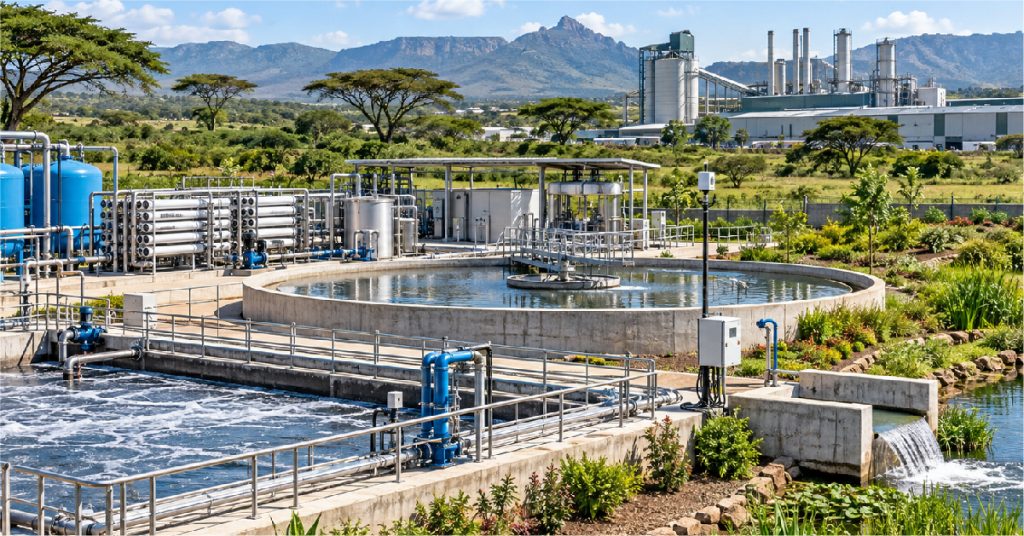
For Kenyan manufacturers, food processors, textile mills and other industrial facilities, wastewater compliance is no longer something to review only when an inspection is due. The Environmental Management and Co-ordination (Water Quality) Regulations, 2024 place clear obligations on facilities that generate and discharge effluent. Meeting NEMA Effluent Discharge Standards therefore depends on more than installing a treatment plant. It requires the right treatment design, disciplined monitoring and a compliance process that works every day.
What the NEMA Effluent Discharge Standards Require
Kenyan 2024 water quality regulation prohibits the presence of industrial pollutants in the environment unless they meet specified requirements. All industries that pollute the environment must abide by the Third Schedule of the Act, while the Fifth Schedule governs the industries that discharge into public sewers. NEMA also requires the industries to hold an effluent discharge license in order to discharge.
This distinction matters. A site sending treated wastewater to a public sewer may face different requirements from one discharging into the environment. Understanding NEMA effluent discharge standards Kenya therefore starts with identifying the discharge pathway and the standards attached to it.
For compliance teams, the framework should become an operating checklist covering discharge limits, sampling points, monitoring, recordkeeping and licence conditions. That is a more reliable approach than treating compliance as an audit-day exercise.
Why Industrial Effluent Falls Out of Compliance
A common mistake is to assume that once an effluent treatment plant Kenya facility is commissioned, compliance becomes automatic. Wastewater characteristics can shift with production schedules, cleaning cycles, raw materials and batch changes.
Restaurants can result in sudden spikes in organic load. The textile industry can see changes in color, salinity, or chemical composition. The processes of finishing using chemicals or metals can lead to significant variations in pH level or dissolved contaminants in liquid. Industrial wastewater treatment facilities meant for average conditions can also be faced with sudden swells of load.
Build Compliance Around the Wastewater
Effective industrial wastewater treatment Kenya projects should begin with wastewater characterisation. Treatment has to reflect what is actually present in the effluent, how concentrations vary and what final quality is required.
1. Characterise the influent
Food processing can lead to sudden increases in organic load. Textile activities may see variations in color, salts or chemicals. Chemical and metal finishing processes can result in very high variability in pH or dissolved pollutants. Industrial wastewater treatment systems designed only for average conditions may have to deal with sudden surges in load.
2. Design for variability
A robust effluent treatment plant Kenya operation needs flexibility rather than performance at only one design point. Equalisation, automated controls and appropriate buffering can help stabilise downstream treatment.
3. Use monitoring as an operating tool
Under the 2024 regulations, licensed dischargers must monitor effluent quality and quantity using prescribed methods and submit monitoring records to NEMA at least once every six months, or as otherwise prescribed by the Authority.
That makes monitoring central to wastewater treatment Kenya. Operators should also watch day-to-day trends. Rising conductivity, unstable pH, deteriorating clarity or changing chemical consumption can warn that performance is drifting before a compliance test fails.
Practical Steps to Reduce Compliance Risk
At first, one should identify the sources of wastewater from the plant. Separation of the clean waste from the dirty waste may help avoid unnecessary treatment. Then, compare the properties of the wastewater with the original design of the wastewater. When changing the raw materials or the technology process, the treatment method may have to change accordingly.
Preventive maintenance plays a crucial role in this system. All elements used in wastewater treatment (pumps, blowers, dosing devices, membranes, and measuring devices) must be serviced in advance and in time. There should be records made regarding chemical consumption, flow rate, plant performance, and quality of wastewater, and the trend should be analyzed before reaching any limit.
For compliance teams searching “effluent discharge regulations Kenya”, the bigger lesson is operational: rules have to become a repeatable plant discipline. The same applies when reviewing effluent discharge regulations Kenya for a new or expanded facility.
For facilities reviewing NEMA effluent discharge standards Kenya, that operational discipline is often as important as the treatment technology itself.
When Recycling and ZLD Make Sense
Not every facility needs Zero Liquid Discharge. However, where water scarcity, freshwater cost or difficult discharge conditions make reuse commercially relevant, recycling deserves evaluation.
An advanced industrial effluent treatment system may combine biological processes with ultrafiltration, reverse osmosis, advanced oxidation or evaporation, depending on the wastewater and reuse target. The objective is the simplest reliable treatment route that supports compliance and the plant’s wider water strategy.
This is where industrial wastewater treatment Kenya can move beyond end-of-pipe treatment. Properly treated water may be reused for selected process or utility applications, subject to the required quality for that use.
How Ion Exchange Supports Kenyan Industries
Ion Exchange has operated in Kenya and East Africa since 2009 and reports more than 200 industrial installations across the region. Its portfolio covers water and wastewater treatment, membranes, ion exchange resins, specialty chemicals, operation and maintenance, audits and other lifecycle services.
For industries strengthening wastewater compliance, an integrated approach can connect characterisation, treatment design, recovery or reuse and ongoing plant performance. Ion Exchange can develop treatment schemes around the characteristics of the wastewater rather than forcing every site into the same process template.
Useful internal links can point to Ion Exchange Kenya’s wastewater treatment, membrane, operation and maintenance, and Zero Liquid Discharge pages. Its Kenya platform also covers membrane-based wastewater technologies and water-recovery approaches suited to different industrial applications.
Final Thoughts
Meeting NEMA Effluent Discharge Standards is ultimately an operational challenge, not only a licensing exercise. Kenyan industries need treatment systems designed around real wastewater variability, backed by monitoring, maintenance and documented process control.
If your facility is planning a new plant, upgrading an existing system or dealing with inconsistent discharge quality, connect with Ion Exchange experts to assess the treatment gap and develop a fit-for-purpose wastewater strategy.
Frequently Asked Questions
What do Kenya’s NEMA effluent rules cover?
They set wastewater quality requirements under Kenya’s Environmental Management and Co-ordination (Water Quality) Regulations, 2024. The applicable standards depend on whether effluent is discharged into the environment or into a public sewer.
Does an industry need a NEMA effluent discharge licence?
A facility discharging effluent into the environment requires a valid effluent discharge licence from NEMA. Applicable approvals should be checked for the specific discharge route.
How often should industrial effluent be monitored?
Licensed dischargers must monitor effluent quality and quantity and submit records to NEMA at least once every six months, unless the Authority prescribes otherwise.
What treatment is used for industrial wastewater?
Treatment depends on wastewater composition. Systems may combine equalisation, clarification, biological treatment, membranes, advanced oxidation, ion exchange or other processes.
Can treated industrial wastewater be reused?
Yes, where treatment produces water suitable for the intended reuse. The required quality depends on the application, wastewater characteristics and applicable requirements.